ExamenFrançais.com est une plateforme d’entraînement spécialement conçue pour les candidats au TEF IRN et au TEF Canada. Notre objectif est simple : vous aider à maîtriser la Compréhension Écrite grâce à des exercices ciblés, progressifs et adaptés au format réel de l’examen.
Quevous prépariez votre carte de résident en France ou votre immigration au Canada, nos tests vous permettent de vous entraîner dans les meilleures conditions — à votre rythme, depuis n’importe quel appareil.
Choisissez votre examen Sélectionnez le TEF IRN pour votre résidence en France, ou le TEF Canada pour votre dossier d’immigration. Nos exercices sont adaptés à chaque format.
02
Compréhension Écrite
Entraînez-vous en Compréhension Écrite Accédez à des textes variés et des questions à choix multiples, conçus dans le style du TEF. Chaque exercice est chronométré pour simuler les conditions réelles.
03
Consultez vos résultats
Après chaque test, obtenez votre score immédiatement et identifiez vos points faibles pour progresser efficacement.
Inscrivez-vous dès maintenant à notre offre à durée limitée !
Organisez facilement une collaboration dynamique et un partage d’idées grâce à une synergie totale axée sur la performance. Développez les potentialités collaboratives plutôt que la simple coopération.
Tout ce que vous devez savoir pour réussir votre épreuve de compréhension écrite.
Qu'est-ce que le TEF IRN ?
Le Test d’Évaluation de Français pour l’Intégration, la Résidence et la Nationalité (TEF IRN) est un examen destiné aux personnes étrangères souhaitant certifier leur niveau de français dans le cadre d’une demande de carte de résident de 10 ans ou de la nationalité française. Il est organisé par la CCI Paris Île-de-France.
Votre plateforme est-elle officielle ?
Non. ExamenFrançais.com est une plateforme d’entraînement indépendante. Elle n’est pas affiliée à la CCI Paris Île-de-France ni à aucun organisme officiel. Nos exercices sont conçus dans le style du TEF afin de vous aider à vous préparer efficacement, mais ils ne constituent pas l’examen officiel.
Est-ce que vos tests sont adaptés au TEF Canada ?
Oui. Nous proposons des exercices spécifiquement conçus pour le TEF Canada, utilisé dans le cadre des demandes d’immigration au Canada. Le format et le niveau de difficulté de nos tests sont adaptés aux exigences de cet examen.
Quelle est la différence entre le TEF IRN et le TEF Canada ?
Le TEF IRN est destiné aux personnes souhaitant s’intégrer en France (carte de résident ou nationalité française). Le TEF Canada est utilisé pour les dossiers d’immigration au Canada. Bien que les deux examens évaluent la compréhension écrite, leurs textes, leur vocabulaire et leurs critères de notation diffèrent. Notre plateforme propose des exercices distincts pour chacun.
Quel niveau dois-je atteindre pour réussir ?
Pour le TEF IRN : un niveau B1 est généralement requis pour la carte de résident de 10 ans, et un niveau B2 pour la nationalité française. Pour le TEF Canada : le niveau requis dépend du programme d’immigration visé. Nous vous recommandons de vérifier les exigences officielles auprès des autorités compétentes.
Pourquoi vous concentrer uniquement sur la compréhension écrite ?
Nous avons choisi de nous spécialiser dans la Compréhension Écrite car c’est l’une des épreuves les plus déterminantes pour valider le niveau requis. Une spécialisation ciblée vous permet de progresser plus rapidement et plus efficacement. Nous travaillons activement à intégrer d’autres compétences sur la plateforme prochainement.
Comment accéder à vos tests d'entraînement ?
Il vous suffit de créer un compte gratuitement sur ExamenFrançais.com. Vous aurez immédiatement accès aux exercices gratuits. Pour débloquer l’accès complet au TEF IRN ou au TEF Canada, il vous suffit de choisir la formule correspondant à votre objectif et de procéder au paiement sécurisé.
Est-ce que je peux accéder aux tests sur mobile ?
Oui. Notre plateforme est entièrement accessible sur smartphone et tablette. Vous pouvez vous entraîner à tout moment, où que vous soyez.
Le paiement est-il sécurisé ?
Oui. Les paiements sont traités via une plateforme sécurisée. Nous n’avons pas accès à vos informations bancaires. En cas de problème, notre équipe est disponible à l’adresse : info@examenfrancais.com
Combien de temps faut-il pour se préparer ?
Cela dépend de votre niveau de départ. En général, 3 à 6 semaines d’entraînement régulier suffisent pour progresser significativement en compréhension écrite. Nous vous recommandons de faire au moins un exercice par jour pour obtenir les meilleurs résultats.
Lorem ipsum gravida nibh vel velit auctor aliquetn sollicitudirem quibibendum auci elit cons equat ipsutis sem nibh id elit. Duis sed odio sit amet nibh vulputate cursus a sit amet . Morbi accumsan ipsum velit. Nam nec tellus a odio tincidunt mauris.
Auci elit cons equat ipsutis sem nibh id elit. Duis sed odio sit amet nibh vulputate cursus a sit amet . Morbi accumsan ipsum velit. Nam nec tellus a odio tincidunt mauris Morbi accumsan ipsum velit. Nam nec tellus a odio tincidunt mauris
Buci elit cons equat ipsutis sem nibh id elit. Duis sed odio sit amet nibh vulputate cursus a sit amet . Morbi accumsan ipsum velit. Nam nec tellus a odio tincidunt mauris
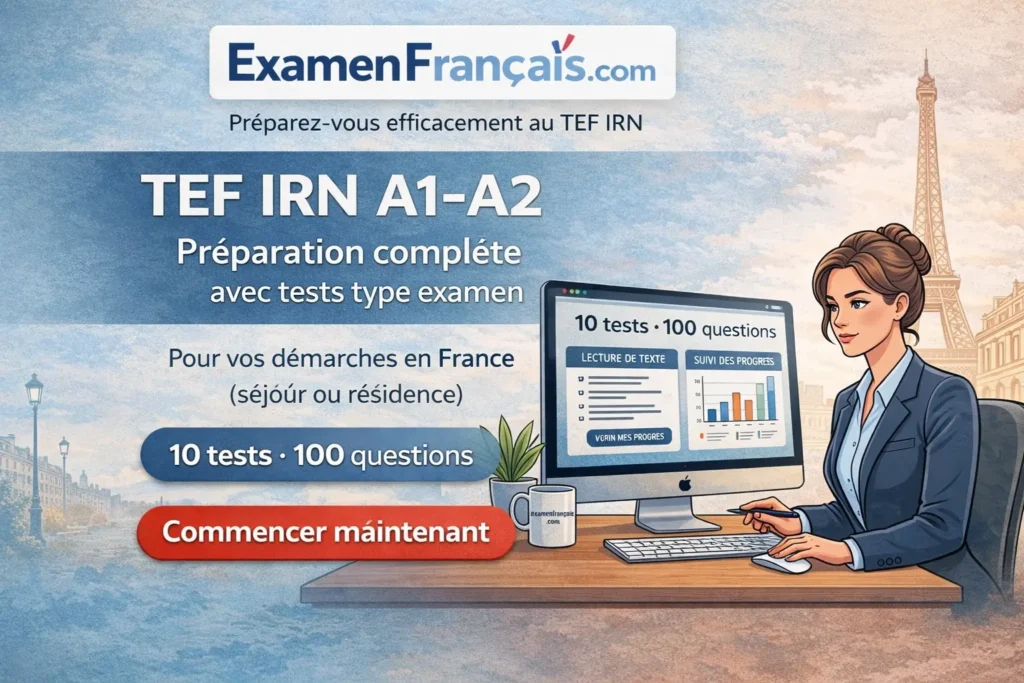
Ce programme vous aide à atteindre les niveaux A2 et B1 du TEF IRN, souvent demandés pour vos démarches administratives en France (séjour ou résidence longue durée).
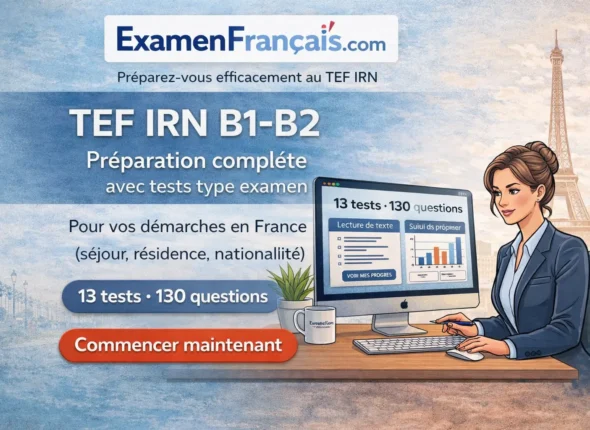
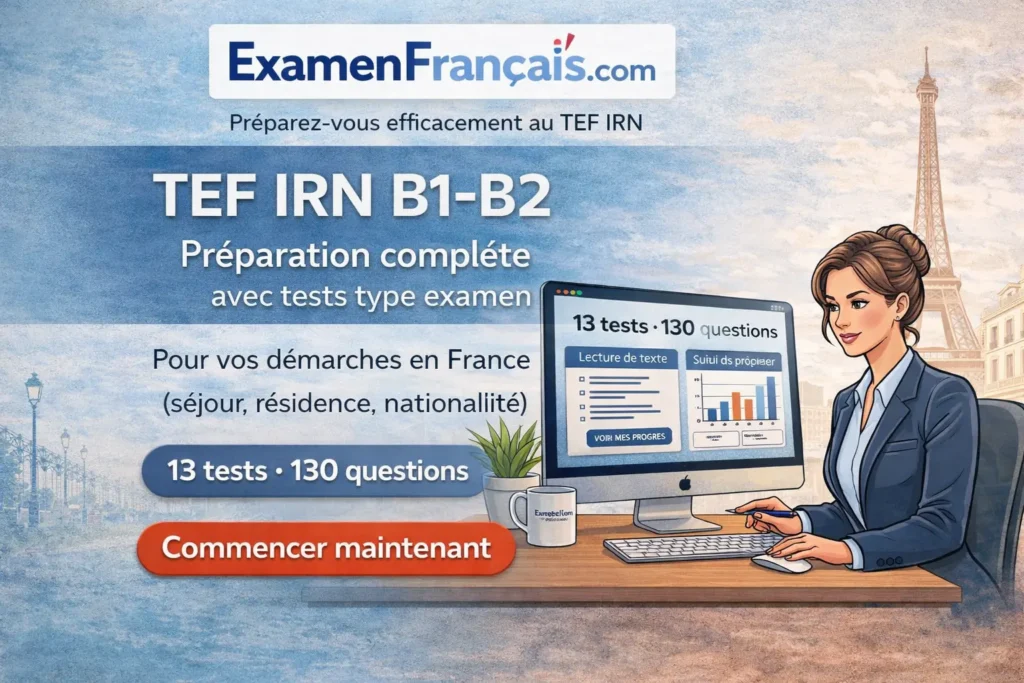
Ce programme avancé vous permet de vous entraîner efficacement aux niveaux B1 et B2 du TEF IRN, souvent requis pour les démarches de résidence longue durée ou de naturalisation en France.
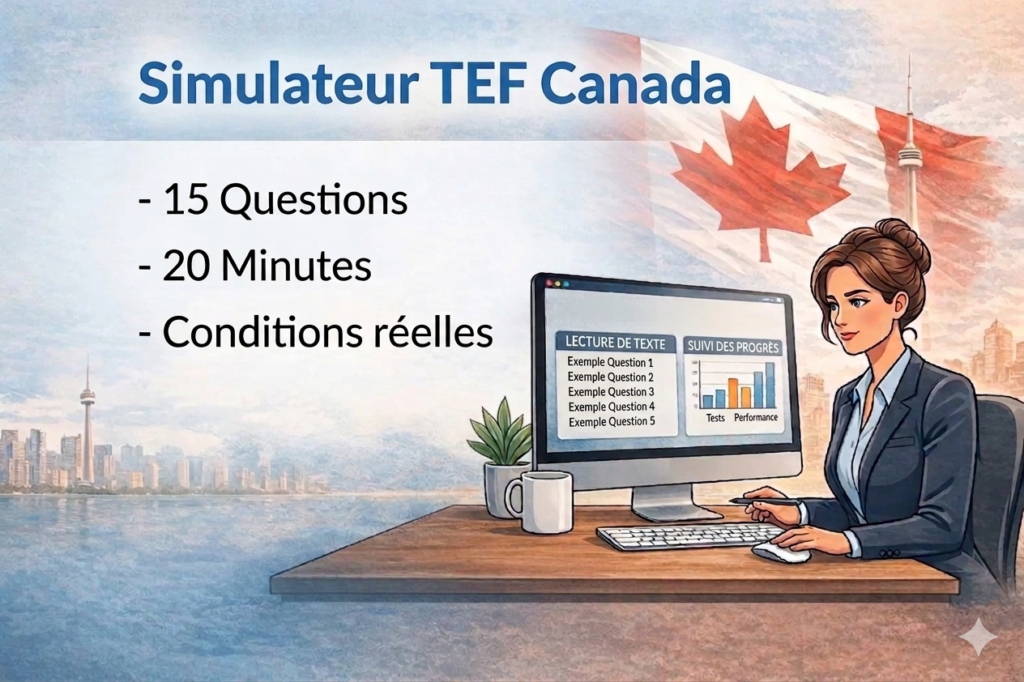
Augmentez votre score au TEF Canada et accélérez votre projet d’immigration. Entraînez-vous avec des tests type examen et maîtrisez le format officiel grâce à un programme complet et structuré. Conçu pour vous aider à atteindre le score nécessaire pour Entrée Express et l’immigration au Canada.